Table Of Content
• We would encourage researchers to consider multiple methods of analysis and secondary analysis within the same data set to explore the rich data that is generated. Holland [4] synthesizes two approaches to analyzing data and suggests some questions to guide analysis. Firstly, framing questions focus on the contexts and conditions that influence changes over time, she gives the example, “what contextual and intervening conditions appear to influence and affect participant changes over time? [4].” Descriptive questions generate descriptive information about what kinds of changes occur, for example, “what increases or emerges through time? [4].” These two types of questions move the researcher forward to develop deeper levels of analysis and interpretation. In the most simple terms, a longitudinal study involves observing the interactions of the different variables in your research population, exposing them to various causal factors, and documenting the effects of this exposure.
Panel study
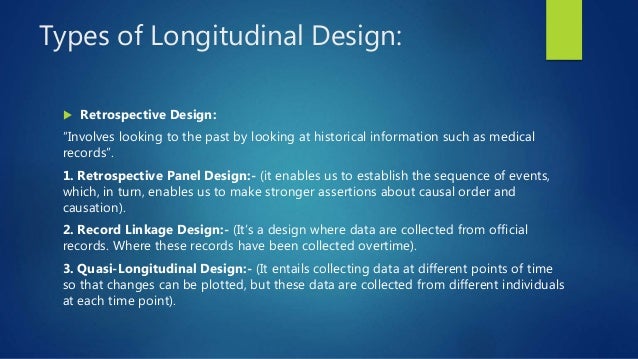
Longitudinal studies on twins have shifted to those within the same household. To test this hypothesis, the researchers recruit participants who are in their mid-40s to early 50s. They collect data related to current physical fitness, exercise habits, and performance on cognitive function tests. The researchers continue to track activity levels and test results for a certain number of years, look for trends in and relationships among the studied variables, and test the data against their hypothesis to form a conclusion. Longitudinal studies, a type of correlational research, are usually observational, in contrast with cross-sectional research. Longitudinal research involves collecting data over an extended time, whereas cross-sectional research involves collecting data at a single point.
Allows researchers to look at changes over time
Key considerations in undertaking longitudinal qualitative projects in health research, include the use of theory, utilizing multiple methods of analysis and giving consideration to the practical and ethical issues at an early stage. Longitudinal studies employ continuous or repeated measures to follow particular individuals over prolonged periods of time—often years or decades. They are generally observational in nature, with quantitative and/or qualitative data being collected on any combination of exposures and outcomes, without any external influenced being applied. This study type is particularly useful for evaluating the relationship between risk factors and the development of disease, and the outcomes of treatments over different lengths of time. Similarly, because data is collected for given individuals within a predefined group, appropriate statistical testing may be employed to analyse change over time for the group as a whole, or for particular individuals (1). This captured well some experiences over time, such as the continuous nature of fatigue and tiredness over time, or the attempts for maintaining normality which were evident only after T2, increasing in complexity at T3 and T4 [22].
What is an L-Shaped Sofa?
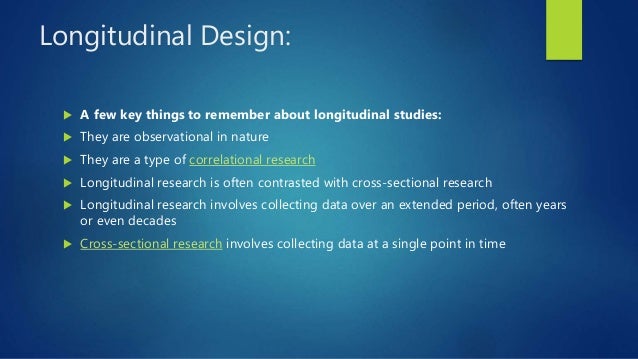
Longitudinal research isn't conducted simply for the sake of being able to say research was conducted over a extended period of time. A longitudinal analysis collects data at different points in time to observe changes in the characteristics of the object of inquiry. Ultimately, collecting data for a longitudinal study can help identify cause-and-effect relationships that cannot otherwise be perceived in discrete or cross-sectional studies. In a panel study, the researcher uses data collection methods like surveys to gather information from a fixed number of variables at regular but distant intervals, often spinning into a few years. It’s primarily designed for quantitative research, although you can use this method for qualitative data analysis. Once researchers have determined the study's scope, participants, and procedures, most longitudinal studies begin with baseline data collection.
Turn your research into critical insights with ATLAS.ti
LQR has been used, for example, to explore the prospect of dying [7], journeys to the diagnosis of cancer [8] and living with haemodialysis [9]. Published papers report mainly interview based studies, sometimes called serial interviews [10,11] to explore change over time, although other data collection methods are used. Different approaches have been taken to collection and analysis of data, for example, the use of longitudinal data to fully develop theoretical saturation of a category in a grounded theory study [12,13].
Can You Put an L-Shaped Sofa in the Middle of the Room?
Panel studies are designed for quantitative analysis but are also usable for qualitative analysis. Ever wondered how researchers gain profound insights into changes and developments that unfold over time? Whether you're a seasoned researcher or simply curious about the power of time-based inquiry, join us as we unravel the mysteries of the longitudinal study landscape. As longitudinal qualitative methods are becoming increasingly used in health services research, the methodological and practical challenges particular to health care settings need more robust approaches and conceptual improvement.
Utilizing multiple analysis strategies and theoretical perspectives has its strengths and allows comparison and gives direction for reanalysis and further interpretation of this important research resource. LQR studies embedded within randomized controlled trials or evaluation studies, of often complex interventions, are used as part of process evaluation. This can help us to understand not just whether an intervention may work but the mechanisms through which it works and if it is feasible and acceptable to the population under study [6]. Due to the length of the research process, some variables might be unable to complete the study for one reason or the other. You decide to study how a particular diet affects athletes’ performance over time.
What (Exactly) Is A Longitudinal Study?
Classroom research is often longitudinal because of the acknowledgment that successful learning takes place over time and not merely in a single class session. Such studies take place over several classes, perhaps over a semester or an entire academic year. In case-control studies, researchers study one group of people who have developed a particular condition and compare them to a sample without the disease. They collect numerical data from the same subjects to track changes and identify trends or patterns. Both studies are valuable for psychologists to observe a given group of subjects.
Joint effect of BMI and metabolic status on mortality among adults: a population-based longitudinal study in United ... - Nature.com
Joint effect of BMI and metabolic status on mortality among adults: a population-based longitudinal study in United ....
Posted: Fri, 02 Feb 2024 08:00:00 GMT [source]
You will also find that this option provides enough data when implemented to provide information on unanticipated relationships or patterns that may be meaningful in specific environments. Since most of these studies are not designed to be lengthy, there are more options to pursue tangents here than in other research formats. Most longitudinal studies are used in either clinical psychology or social-personality observations. They are useful when observing the rapid fluctuations of emotion, thoughts, or behaviors between two specific baseline points. Some researchers use them to study life events, compare generational behaviors, or review developmental trends across individual lifetimes.
A cohort study entails collecting information from a group of people who share specific traits or have experienced a particular occurrence simultaneously. For example, a researcher might conduct a cohort study on a group of Black school children in the U.K. Growth curve analysis is a specialized technique commonly employed in longitudinal studies to model and understand individual trajectories and changes over time. By diligently managing data collection, addressing missing data, and implementing retention strategies, you can ensure that your longitudinal study yields high-quality, reliable, and actionable results.
That means there is a large amount of data that must be collected from numerous individual sources to draw meaningful connections to the topic under study. If there is not a significant sample size available to researchers for the project, then there may not be enough information available to find specific conclusions. The real-time observational data that researchers collect during longitudinal studies is both informative and efficient from a cost perspective when looking at short-term situations. One of the problems that this method encounters is that the information being collected comes from a relatively small number of individuals. Unless it is built into the rules for collection, there may be no controls in place for environmental factors or cultural differences between the individuals involved.




No comments:
Post a Comment